
How Does Brazilian Jiu Jitsu Help With Resilience?


Introduction
Life rarely goes exactly as planned. Careers hit obstacles, relationships face challenges, and personal goals often require persistence through setbacks. Because of this, resilience—the ability to recover from difficulties and continue moving forward—has become one of the most valuable traits a person can develop.
Many people search for ways to build resilience through books, seminars, and motivational content. While these resources can provide valuable insights, resilience is ultimately developed through experience. You build resilience by facing challenges, adapting to adversity, and learning how to keep moving forward when things become difficult.
This is one reason Brazilian Jiu Jitsu has become such a powerful tool for personal growth. When people ask, “How does Brazilian Jiu Jitsu help with resilience?” the answer goes far beyond physical training. Every class provides opportunities to face obstacles, solve problems under pressure, and learn how to remain calm when situations become uncomfortable.
At Liberdade BJJ in Nashville, students often discover that the lessons learned on the mats extend far beyond Jiu Jitsu. The resilience developed during training frequently carries over into work, school, relationships, and everyday life.
What Is Resilience and Why Does It Matter?
Resilience is often misunderstood as simply being tough or refusing to quit. In reality, resilience is the ability to adapt, recover, and continue progressing despite challenges.
Resilient individuals are not people who never fail. Instead, they are people who learn from setbacks and continue moving forward.
Characteristics of resilient people include:
Emotional control during stressful situations
Adaptability when plans change
Confidence after setbacks
Persistence through difficult challenges
The ability to remain focused under pressure
These qualities are valuable in every area of life, which is why many people seek activities that naturally encourage resilience development.
Brazilian Jiu Jitsu provides exactly that environment.
Brazilian Jiu Jitsu Teaches You How to Handle Failure
One of the most important ways resilience through Jiu Jitsu develops is through regular exposure to failure.
Everyone Gets Submitted
In the beginning, new students are submitted frequently. Even experienced practitioners continue to get caught by training partners.
This can be uncomfortable at first.
Many activities allow people to avoid failure. Jiu Jitsu does not.
The mats provide honest feedback. If something doesn’t work, you know immediately.
Over time, students begin to understand that failure is not a sign of weakness. It is part of the learning process.
Failure Becomes Information
Instead of viewing mistakes as personal shortcomings, practitioners learn to view them as opportunities for improvement.
This shift in perspective is one of the foundations of resilience.
The question changes from:
“Why did I fail?”
to:
“What can I learn from this?”
That mindset can have a powerful impact outside the academy as well.

BJJ Develops Emotional Resilience Under Pressure
One reason people struggle during difficult situations is that pressure often triggers emotional reactions.
Brazilian Jiu Jitsu creates a safe environment for practicing emotional control.
Learning to Stay Calm
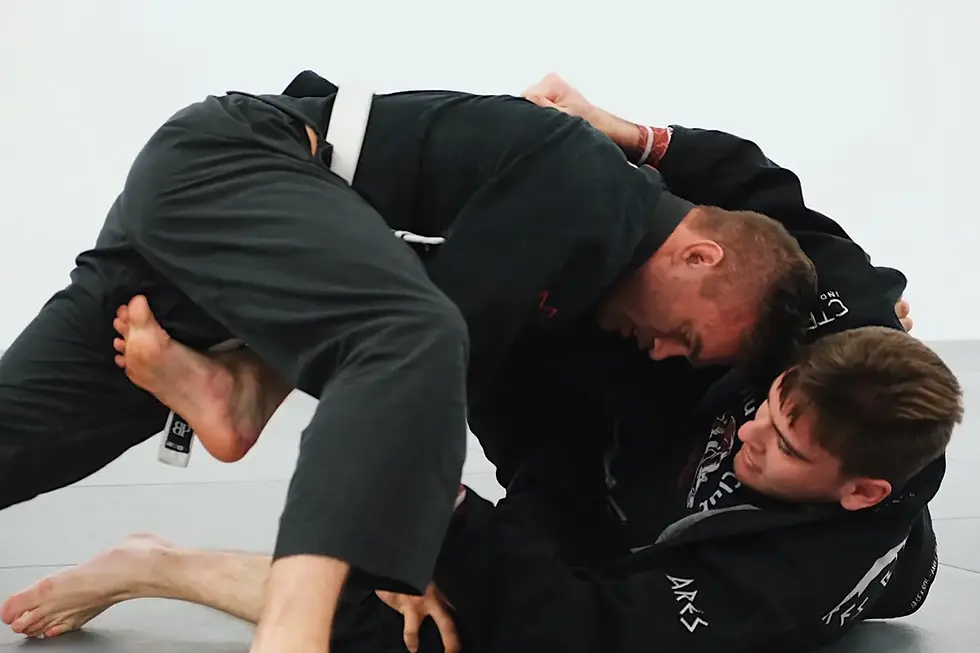
During sparring, students regularly experience situations where they feel trapped, uncomfortable, or outmatched.
Their natural instinct may be to panic.
However, panic usually makes the situation worse.
Through training, students learn to:
Slow their breathing
Stay focused
Analyze problems logically
Make better decisions under stress
Over time, these habits become transferable skills.
When stressful situations arise at work or in everyday life, practitioners often find themselves responding more calmly and effectively.
Resilience Grows Through Consistency
Many people believe resilience comes from major life events.
In reality, resilience is often built through small, repeated challenges.
Showing Up When You Don’t Feel Like It
Some days training feels great.
Other days it doesn’t.
There are days when students are tired, busy, stressed, or discouraged.
Yet resilience grows when people continue showing up despite those obstacles.
Each class becomes a small lesson in discipline and persistence.
Over months and years, those lessons compound.
This is one reason many practitioners describe Jiu Jitsu as life-changing.
Brazilian Jiu Jitsu Encourages Adaptability
Resilience is not just about endurance.
It is also about adaptation.
In BJJ, no technique works perfectly every time.
Training partners react differently.
Strategies must change.
Plans must adjust.
Learning to Solve Problems in Real Time
Every roll presents a new puzzle.
Students learn to:
Analyze situations quickly
Adjust strategies
Remain flexible
Stay focused on solutions
This develops problem-solving skills that are useful in nearly every area of life.
People who become adaptable are often more resilient because they can adjust rather than becoming stuck when challenges arise.
The Belt Journey Builds Long-Term Resilience
Few worthwhile achievements happen overnight.
Brazilian Jiu Jitsu reinforces this lesson constantly.
Progress can be slow.
Some techniques take months to understand.
Some positions require years of refinement.
Yet students continue training.
Delayed Gratification and Growth
Modern society often emphasizes instant results.
Jiu Jitsu teaches patience.
Students learn that meaningful progress comes from consistent effort over time.
This perspective strengthens resilience because practitioners become more comfortable with long-term growth rather than immediate success.
The Community Aspect of Resilience
Another overlooked answer to the question “How does Brazilian Jiu Jitsu help with resilience?” is community.
Resilient people rarely succeed entirely on their own.
Support systems matter.
At a healthy academy, students encourage one another through challenges, celebrate milestones, and help each other improve.
Training partners become teammates in personal growth.
This supportive environment makes it easier to stay committed during difficult periods.
How Does Brazilian Jiu Jitsu Help With Resilience Both On and Off the Mats?
Many students begin training because they want fitness, self-defense skills, or a new hobby.
Over time, they often discover something more valuable.
They become better at handling life’s challenges.
Work stress feels more manageable.
Unexpected setbacks become easier to navigate.
Difficult conversations become less intimidating.
The same lessons learned while escaping bad positions on the mats begin to influence everyday decision-making.
That is why so many long-term practitioners describe Brazilian Jiu Jitsu as more than a martial art.
It becomes a framework for personal development.
Training at Liberdade BJJ
At Liberdade BJJ, students are encouraged to progress at their own pace while developing skills that extend beyond technique.
Whether someone is training for fitness, self-defense, competition, or personal growth, the environment emphasizes consistency, learning, and resilience.
If you’re interested in experiencing how Brazilian Jiu Jitsu can help build confidence, perseverance, and mental toughness, explore our Adult BJJ Classes in Nashville
If you’re completely new to training, read What to Expect in Your First BJJ Class
Conclusion
So, how does Brazilian Jiu Jitsu help with resilience?
It teaches people how to handle failure, stay calm under pressure, adapt to challenges, remain consistent, and pursue long-term growth.
Perhaps most importantly, it provides regular opportunities to practice these skills in a supportive environment.
Resilience is not something you are born with. It is something you build.
For many people, Brazilian Jiu Jitsu becomes one of the most effective ways to develop that ability—one class, one challenge, and one lesson at a time.


Comments